

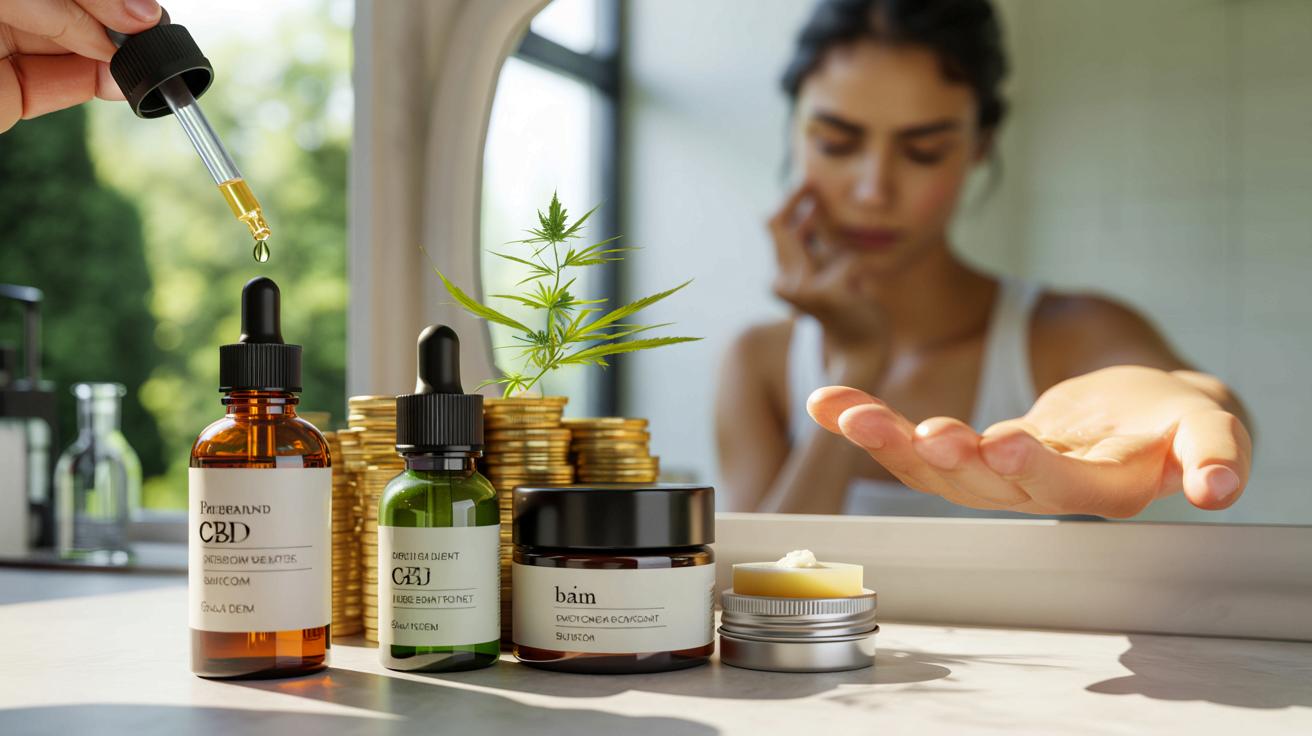
Beauty aisles are shifting fast, and a botanical newcomer keeps nudging into bathroom cabinets across Europe, testing habits and trust.
CBD is no longer a fringe ingredient. It sits beside hyaluronic acid and retinol, and brands pitch calm, glow and balance. The question for your skin and your wallet remains: can CBD hold its place in mainstream beauty, or is this a passing flirtation with hemp?
The CBD boom in beauty by the numbers
European CBD cosmetics surpassed €580 million in 2022, with launches rising 42% between 2021 and 2023. France’s broader hemp-derived products market hovered around €80 million in 2023, with skincare one of the most visible segments. Buyers skew towards urban, eco-aware consumers who value short ingredient lists and organic seals. Surveys suggest 67% of interested shoppers prefer certified organic formulas.
CBD skincare now sits in a €580 million European niche, growing fast but still searching for proof and clear rules.
Product formats look familiar. Oils, serums, light moisturisers, masks and targeted balms dominate shelves. Typical concentrations range from 100 to 1,000 mg of CBD per bottle, usually blended with hemp seed oil rich in linoleic and alpha-linolenic acids. Price bands reflect premium positioning: a 30 ml serum often lands between €35 and €80, well above many botanical rivals.
What does science say about the skin benefits?
How CBD might work
Researchers map CBD’s interactions with the cutaneous endocannabinoid system. Early data point to potential anti-inflammatory, soothing and antioxidant effects. That theory aligns with user claims around redness, dryness and post-exercise soreness. Laboratory studies show promise under controlled conditions, especially where barrier stress and oxidative triggers come into play.
What remains unproven
Dermatology’s gold standards are still thin on the ground. Independent, randomised, double-blind trials are scarce, and dose–response ranges for topical use remain fuzzy. A 2022 review in a dermatology journal flagged inconsistent outcomes and small cohorts. Without stronger evidence, it is hard to separate CBD’s role from the moisturising efficacy of carrier oils or co-actives like niacinamide and glycerin.
Claims travel faster than clinicals: the gap between marketing and reproducible data keeps dermatologists cautious.
Laws, labels and logistics
What EU and French rules require
EU rules allow CBD in cosmetics when extracted from authorised hemp varieties and when products contain no detectable THC. Brands must file on the CPNP portal, document ingredient safety and trace supply chains. In France, vigilance remains high, with checks focused on contamination by other cannabinoids and on accurate labelling.
Topic
Requirement
Practical effect
THC content
No detectable THC
Batch testing and higher QC costs
Source
Authorised hemp varieties
Limited suppliers and paperwork
Notification
CPNP submission
Regulatory delays before launch
Safety file
Evidence of purity and stability
Costly analytics, added lead times
Supply chains feel these constraints. Brands publish certificates of analysis, push for traceable farms and adopt CO2 extraction to reduce solvent risk. Large cosmetic groups watch from the sidelines, waiting for regulatory clarity and stable sourcing before scaling.
What people actually buy and pay
Consumers seek calm skin, less redness and a gentler routine. They also want clean labels, fragrance-light textures and planet-friendly packaging. Price remains a brake, especially outside specialist e-commerce and organic stores.
- Face oils with 300–1,000 mg CBD for night routines and dry zones.
- Serums pairing CBD with hyaluronic acid for hydration without weight.
- Balms for post-training muscle care and wind-chapped skin.
- Eye creams and masks for short-contact soothing.
- Occasional hair oils aimed at scalp comfort and shine.
Distribution stays patchy. Mainstream supermarkets and high-street pharmacies stock limited ranges. Online shops and niche boutiques carry the bulk, which fuels stockouts on popular SKUs when harvests or testing bottlenecks hit.
Obstacles that still block the bathroom shelf
The proof problem
Without robust, peer-reviewed trials, CBD risks being seen as a nice-to-have plant extract. Sensitive-skin users and acne-prone buyers want clear protocols, endpoints and timeframes. They also want head-to-head comparisons against benchmarks like 0.3% retinol, azelaic acid or panthenol.
Price, stigma and access
Premium pricing narrows the audience. Lingering confusion between CBD and recreational cannabis spooks a minority of shoppers, despite no psychotropic effect in compliant formulas. Travel anxiety persists, especially at airports, where labelling and batch certificates defuse most worries yet do not fully calm nerves.
The innovation playbook brands are using
From single-hero to synergistic blends
Formulators now pair CBD with proven actives to chase additive benefits. Hyaluronic acid addresses hydration; vitamin C tackles dullness; retinol targets texture and fine lines. A few labels test CBG, another non-psychotropic cannabinoid, to differentiate claims. Texture trends lean toward gel-serums and light emulsions with quick absorption and low scent. Packaging skews to recycled glass and paper, with batch QR codes for lab reports.
Innovation favours synergy: CBD plus hyaluronic acid or vitamin C sells a clearer story than CBD on its own.
What a shopper can do right now
- Check the label for CBD quantity per bottle and per dose; look for batch-linked lab reports.
- Start low and simple: one CBD product at a time for two weeks to judge effect and tolerability.
- Watch the base oils; hemp seed oil suits many, but fragrance and essential oils can sting reactive skin.
- Assess cost per milligram of CBD; compare a €40/300 mg oil versus a €70/1,000 mg serum by dose.
- Patch test behind the ear or on the jawline for 48 hours before full-face use.
- Avoid big medical claims; topical cosmetics cannot treat disease, and they should not promise to.
Signals to watch through 2025
Expect two pivotal shifts. First, more rigorous clinicals funded by consortia of suppliers and indie brands, designed to map dose, contact time and endpoints like TEWL, redness indices and patient-reported comfort. Second, a clearer enforcement line on THC detection thresholds and marketing language across the EU, which should reduce label anxiety and stabilise pricing.
If those arrive, mainstream retailers will broaden their CBD shelves, while chemists will ask for fragrance-free, hypoallergenic variants for sensitive skin. The winners will likely be formulas that prove a measurable soothing effect within four weeks at a fair cost per use, rather than the highest CBD number on the box.
Extra context that may shape your decision
Cold-chain storage is rarely required, but CBD can oxidise. Opaque bottles, tight caps and cool cupboards preserve potency. Look for antioxidant co-formulants such as vitamin E. For athletes subject to testing, cosmetic CBD should contain no THC; stick to brands that publish sensitive analytics, particularly for lip balms that may be ingested in trace amounts.
Pregnancy and breastfeeding raise separate questions. Many dermatologists suggest pausing CBD cosmetics during these periods due to limited data. For inflammatory conditions like eczema or acne, a clinician can help position CBD alongside established agents such as ceramides, urea, azelaic acid or benzoyl peroxide. A simple two-step simulation for value: calculate cost per week at your planned dose, then compare to a non-CBD routine that delivers similar hydration and calm. If the CBD variant beats your current routine on comfort or flare frequency within a month, it earns its spot on your shelf.
