

For Black women, our appearances are often placed under a microscope—every hairstyle, outfit, and beauty choice dissected and debated. It’s a scrutiny that’s long been rooted in racism and bias, one that often demands we sacrifice authenticity for acceptability. For someone like Michelle Obama, the first Black First Lady of the United States, that pressure was only magnified by the visibility of her role.
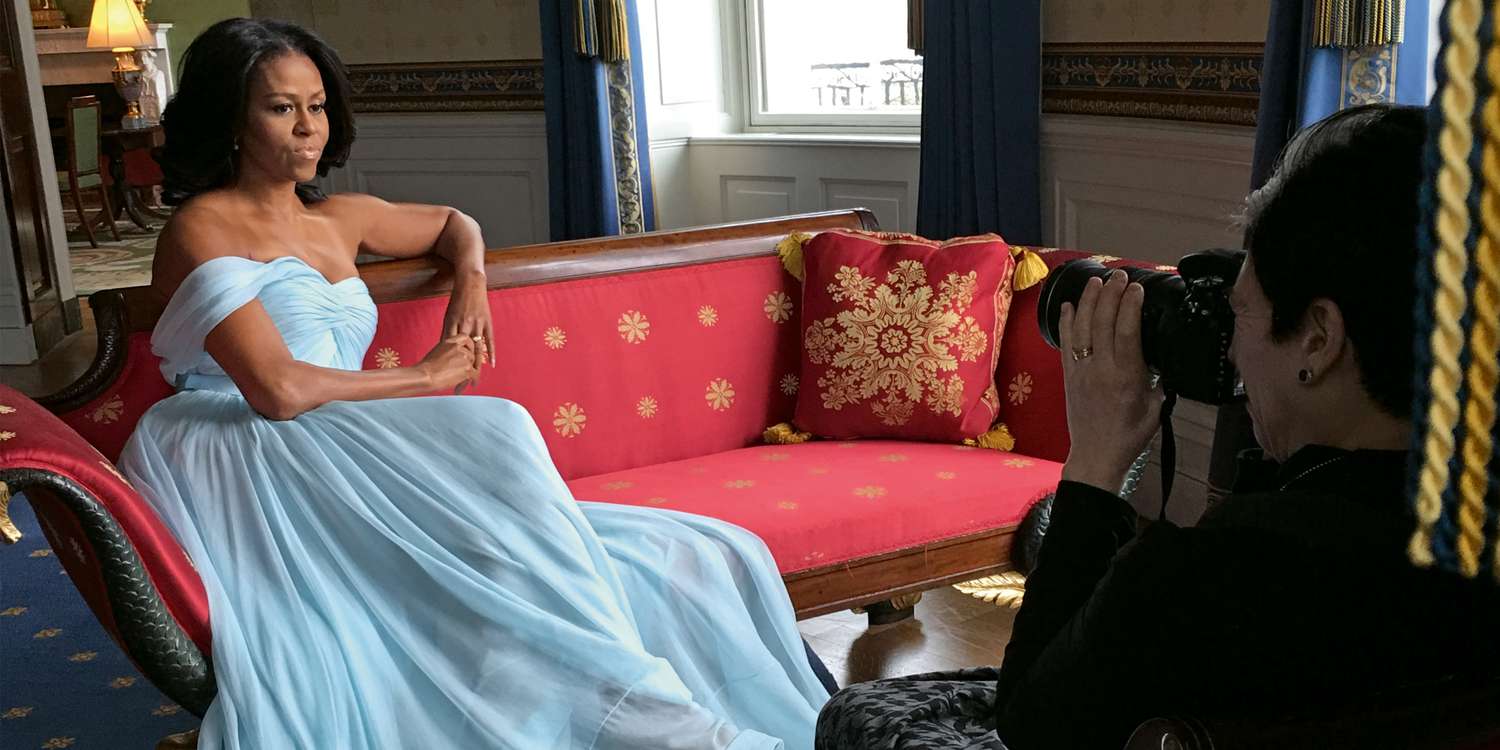
Throughout her time in the White House, her image was not just her own—it became a symbol, a celebratory statement, and at times, a battleground for how the world views Black womanhood. In her new coffee table book, The Look, Mrs. Obama explores how she utilized beauty and fashion as First Lady and how she’s defining her personal style in her post-White House life. To provide an even more intimate account of her journey, she also tapped the powerhouse team that helped her prepare for some of her most memorable moments: longtime stylist Meredith Koop, makeup artist Carl Ray, hairstylists Yene Damtew, Johnny Wright, and Njeri Radway. “They’re not just people who do my hair and makeup, and put clothes on me; they’re family,” Obama tells Byrdie. “They come to Thanksgiving. Yene is a mom now. Her children are like my children. And it’s just been a joy watching them evolve. Our relationship has just become stronger.”
Chuck Kennedy / Carl Ray
Now, at 61, Obama is crystal clear about her definition of beauty, one that is shaped not just by aesthetics but by how she lives her life. “Beauty means how I feel,” she says. “It starts internally, and that resonates outward. I’m trying to make sure that I’m stretching more and that I’m playing tennis like I never have before. I’m in the sun. I like to be outside. I love my skin when I have color in it. I love the way I feel when I feel strong. When I’m doing the things that I love to do, and I’m taking care of my body, that’s when I really feel like my best.”
While Obama’s definition of beauty starts from within, she’s also had to be strategic in her approach to dressing. During her family’s first election campaign and term in the White House, Mrs. Obama notably adopted an approachable, high-low style ethos, often wearing off-the-rack items from brands like J.Crew and emerging American designers like Jason Wu.
“As a Black woman, I felt that I had to make sure that people could see my feminine side,” she told People in an exclusive interview in October. “Especially early on in the campaign, when I was being attacked as being angry, a shrew, demeaning my husband—all these labels were coming in on me that were essentially trying to rob me of that femininity. I understood that, going into it. And I didn’t feel like it was a struggle to do it, because number one, I respected the position. I took the role as first lady very seriously. I was a famous person, but I wasn’t a starlet. And so that meant that the clothes could never speak louder than anything I had to say.”
This sentiment extended to her hair and makeup, which during her first term typically consisted of a classic press-and-curl and simple, neutral glam. But with her husband, Barack Obama’s re-election in 2012, Mrs. Obama began to experiment with more expressive styles.
Pete Souza
In The Look’s foreword, American academic and professor Farah Jasmine Griffin writes: “In the second term, we would witness her step deeper into herself and, in so doing, step outside of the conventional safety zone. To her warmth and kindness, she added a more confident, comfortable assertiveness.”
One clear example of Mrs. Obama’s evolving approach to self-presentation was her debut of bangs (cut by Johnny Wright) in January 2013, just days before the second inauguration—a practical change that also reflected her refreshed self-image. “Black women will understand, our edges need a break from blow-drying and braiding, and all of that,” she says. “And a nice bang, that rests your edges. And we were giving my edges a rest for the second term. And so we cut bangs, and then it was like, ‘Oh, my god.'”
Chuck Kennedy
The bangs may have seemed like a minor modification, but in the world of Michelle Obama, nothing about her appearance was ever small. Every change became front-page news, sparking reactions from across the country—and even within the White House. “Well, they reported to the West Wing, ‘Do you know she’s [getting bangs]?’ I was like, ‘Why are you calling them? Why do you have to call people about my hair?” she says. “But it was good that we gave them a heads-up.”
While the world watched her every move, for those who worked alongside her, the focus was never on the noise—it was about reflecting who she truly was in that moment. For makeup artist Carl Ray, Mrs. Obama’s second inauguration look is one that perfectly captured that spirit. “I always want to allow her authenticity to reflect in her message, and the makeup plays a supporting role,” he says. “The second inauguration was a very proud day for me, supporting such a historical moment. Michelle looked elegant, radiant, and confident. The opportunity to create so many memorable looks for the inauguration, the parade, and all the balls will stay with me forever. These are some highlights of my 16 years working with Michelle Obama.”
When the Obamas’ tenure in the White House ended on January 20, 2017, Michelle Obama was able to regain a sense of freedom in her day-to-day life and her style decisions. Griffin writes, “In this post-White House life, she has not only made bold fashion choices, but also chosen to share her voice, unfettered by how it might impact a political campaign or if it might offend those whose sensibilities cannot bear the truth about our nation’s past.”
Getty Images
In this era of her life, Mrs. Obama has been no stranger to viral fashion and beauty moments. In terms of the former, the sparkly thigh-high Balenciaga boots she wore during a stop on her book tour immediately come to mind. “I wasn’t going to wear them,” she says. “Meredith got those, and she was like, ‘She’ll never wear these.’ I put them on and was like, ‘Okay, we’re going for it.’ I wouldn’t have done that as First Lady because the boots would’ve taken over. You don’t give a speech in those boots. You can’t show up at a state dinner with those boots. But you can [wear them] on your book tour in New York with Sarah Jessica Parker.”
As it relates to the latter, Mrs. Obama has rediscovered joy and comfort in wearing braids. In recent years, she’s embraced protective styles—sporting them everywhere from her White House portrait unveiling to late-night television appearances. It’s a full-circle moment that sends an important message to Black women. “It sends a message of confidence and that it’s okay to show up in the world as your natural self and just be,” licensed cosmetologist and Mrs. Obama’s go-to braider Njeri Radway says.
Meredith Koop
Hairstylist Yene Damtew echoes this sentiment, hoping that The Look encourages readers to reflect thoughtfully on the important role hair plays in society. “There are so many pressures women face regarding our image,” she says. “For Black women, that pressure is often heightened because hair has long been a point of contention in how we are perceived. I hope readers come to understand the deep cultural traditions and norms, both positive and challenging, that have influenced how we’re expected to assimilate into beauty standards that were never designed to include us. More importantly, I hope readers reflect on why they feel entitled to have an opinion about how someone else chooses to wear their hair, and where those preconceived notions come from. Above all, I want them to celebrate the beauty, creativity, and heritage of Black hair and the traditions that have been passed down from generation to generation.”
Mrs. Obama also hopes that her 304-page retrospective sparks joy, reflection, and inspiration as readers flip through the images and anecdotes. “I hope the book is fun—and I think that’s an important thing,” she says. “We need a little joy amongst all the challenges that we’re facing, and hopefully this will do that for anyone who picks it up.”
