

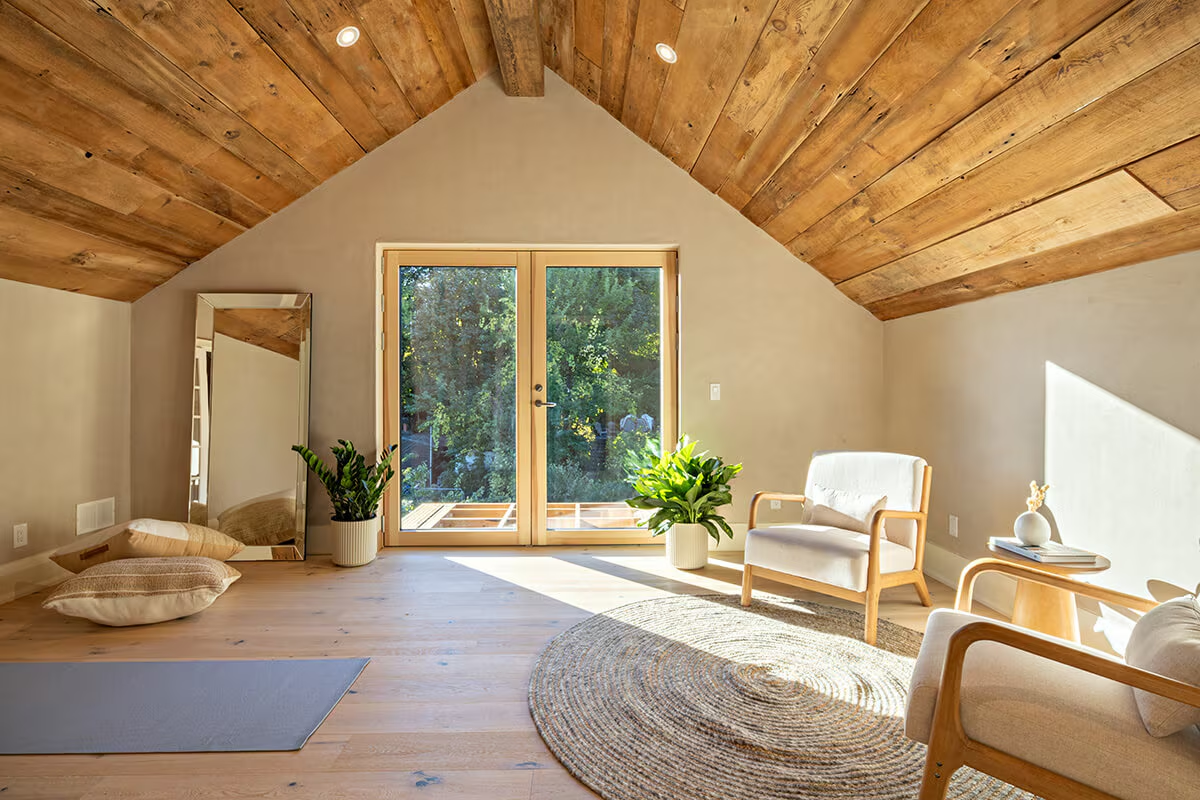
Open this photo in gallery:
A recent $1.8-million project
spearheaded by Greening Homes is a
good illustration of sustainable
residential building trends. It involved
the complete teardown of an old
bungalow in Toronto’s St. Clair West
Village and building a three-level,
multigenerational home. Instead of
using vinyl siding on the exterior,
Greening Homes used shou sugi ban,
an ancient Japanese technique of
preserving wood by charring it. The
team made the ceilings inside from
reclaimed barn board and, instead of
paint on the walls, earthen clay plaster
was used, which is a durable,
environmentally friendly wall finish.IMAGE COURTESY OF GREENING HOMES
Sustainability and a smaller eco-footprint are increasingly in demand. But are there ways to balance sustainable technology in the home with comfort? The answer is yes, with smartly layered systems that make a space feel more indulgent while at the same time cutting energy use.
Solar panels that convert sunlight into electricity can be hidden behind sleek tiles, for example. A green roof that is covered with vegetation, soil and drainage layers can turn a home into an ecosystem that cools a building and saves energy costs, but can also be beautiful. Options can be range from extensive, with trees, shrubs and full gardens to low maintenance, with grasses and smaller plantings, with the added benefit of boosting urban biodiversity.
Smart glass windows that tint automatically to block the heat, mood lighting that synchronizes with the body’s circadian rhythms and electric vehicle charging station technology that’s improving through faster charging speeds are other examples of what luxury homeowners are increasingly opting for.
Natalie Chong, owner of Nest Design Studios and host of Rentovation on Home Network, says she is seeing an increased use of geothermal energy and heated flooring, instead of forced-air or traditional HVAC systems.
“I feel like being aware of the materials you are using is the most important way of achieving both sustainability and aesthetics,” she says, adding that sourcing items more locally is becoming a priority.
A recent $1.8-million project spearheaded by Greening Homes is a good illustration of sustainable residential building trends, says Chris Phillips, president of the company specializing in sustainable home renovations in the Greater Toronto Area and which was part of the Toronto Fall Home Show in September. The project involved the complete teardown a decades-old bungalow in Toronto’s St. Clair West Village and building a three-level (plus basement), multi-generational home at just under 3,000 square feet.
“A lot of what we did there was on trend,” he says. The windows were built with high-end, triple-pane glass imported from Poland, for example.
Open this photo in gallery:
IMAGE COURTESY OF GREENING HOMES
Creating a net-zero home, which is one that annually produces as much energy as it consumes, is often the goal. Such a home often creates its own power through solar energy and then is highly insulated to prevent energy loss, Phillips says. Insulation products are turning away from traditional foam and being replaced with wet-applied cellulose, which is made from recycled materials such as paper fibres and requires less energy to manufacture.
The siding on the St. Clair West’s home exterior is also high-end, Phillips says. Rather than using vinyl siding, Greening Homes used shou sugi ban (also known as yakisugi), which is an ancient Japanese technique of preserving wood by charring it.
“It gave the home a timeless and modern exterior,” Phillips says, adding that they were “staying away from plastics and highly manufactured items and going with what is truly less impactful.”
Sustainable luxury homes are increasingly featuring metal or composite roofing, which is ideal for solar panels, rather than asphalt shingles, which are a petrochemical product. An added bonus of metal roofing, Phillips says, is that potable rainwater can be captured into an underground storage tank from it as it doesn’t contain chemicals that could leach into water, and then run through a filtration process to supply water to all the taps in the home.
Using natural materials inside homes is in vogue because it supports the goal of healthier, energy-efficient buildings that don’t sacrifice beauty, Phillips says. His team moved away from paint on the walls in the St. Clair West home and used earthen clay plaster – which is a durable, environmentally friendly wall finish made with a mixture of clay, sand, water and often natural fibres – on top of the drywall, giving the walls interest and texture. The ceilings were made from reclaimed barn board, another product with low environmental impact.
“These homeowners [in St. Clair West Village] were looking for self-sufficiency,” Phillips says. “Extremely high insulation, extremely airtight and solar-power generation with backup batteries. People are looking for backup in the event of an extreme event. That’s a big element of what we are seeing in the luxury market.”
The goal is to have “healthy building materials in a super high-performing home. It’s not just about energy efficiency. It’s about resource efficiency, paying attention to low carbon. It’s a statement piece.”
Kortney Wilson, host of Life is Messy on Home Network, says she has noticed luxury homes increasingly being fully committed to green living.
Open this photo in gallery:
IMAGE COURTESY OF GREENING HOMES
“It’s honestly pretty inspiring,” she says. “Think solar panels seamlessly built into the design, smart systems that learn your habits to save energy, and wellness-driven touches like purified air and natural light optimization. The best part? Sustainability is becoming the ultimate status symbol; it’s not just eco-friendly, it’s elegant.”
The key is using smart, hidden technology, she adds.
“Things like solar energy systems, advanced insulation and automated climate control are all seamlessly built into the design,” Wilson says. “Then you layer in natural materials, healthy finishes and spaces that breathe with light and nature. It’s not about giving anything up. It’s about redefining what luxury really means: living beautifully and responsibly.”
Wilson says that, in her designs, she likes to use natural, high-quality materials and smart, sustainable touches that make life easier without feeling flashy.
“When a space feels warm, authentic and built to last, that’s when true luxury shows up,” she says.
Sustainable features are numerous in a new luxury condo project in Toronto’s Forest Hill neighbourhood. Developed by Stafford, 429 Walmer is a collection of 48 private residences that has green roofs and outdoor terraces, low-VOC (volatile organic compound) paint, LED lighting, programmable thermostats, rainwater harvesting, smart metering, tri-sorter waste systems (which separate garbage and recyclables) and building automation.
What is particularly interesting about developments in sustainable practices is that they take advantage of technology. For instance, setting lights to go on and off at times that meet a family’s schedule are not only a convenience, but save on energy, says Joel Tanner, chief executive officer of smpl Design Studio in Hamilton. Advances in home automation go hand in hand with sustainable practices.
“There are devices that tie into the home automation system that can manage air quality and increase fan speed on an ERV [energy recovery ventilator] or HRV [heat recovery ventilator] or warn a homeowner of elevated carbon monoxide … from a gas-burning appliance inside the home.
“If you happen to install solar panels to harness the sun’s energy, you can track energy flow into and out of the home, as well as perhaps how much money you’ve earned on money going back into the grid on a specific day or week of the month. The list is endless when it comes to automating a home and linking it to new and exciting green technologies coming into our market.”
All of these sustainability practices, combining technology and more environmentally sound products with thoughtful design and an eye for aesthetics, are starting to redefine what luxury means.
“It’s really about lasting comfort, smart efficiency, and materials that look great and perform well,” says Scott McGillivray, host of Renovation Resort on Home Network.
“The best sustainable homes feel indulgent because they’re built to stand the test of time. You focus on performance and craftsmanship over gimmicks. Classic design paired with durable, eco-conscious materials will always outlast short-term trends.”
Advertising feature produced by Globe Content Studio. The Globe’s editorial department was not involved.
