

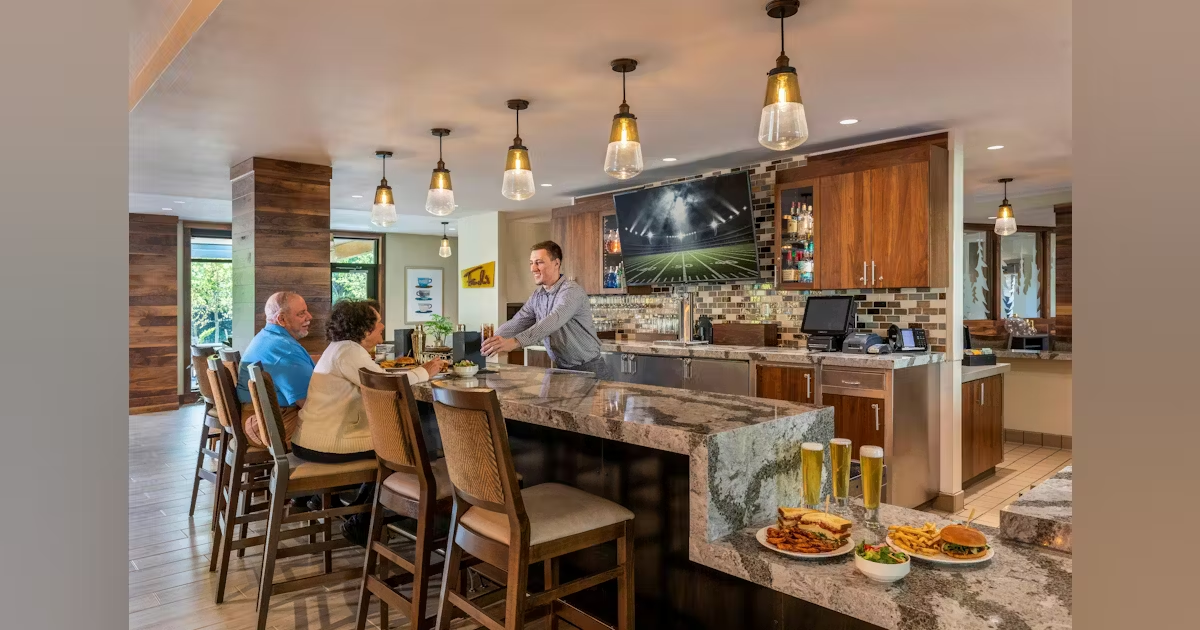
Senior living facilities provide an opportunity for respite for aging adults. These communities have grown into diverse locations where seniors can live out their days however they choose. Diverse amenities and geographic options allow residents to spend their time in a myriad of ways—whether it be gardening outdoors or relaxing inside.
Two years ago, we reported on the top 10 trends in senior living facilities in our 2023 Multifamily Annual Report. There we saw how senior living communities have shifted since their pre-pandemic days. But how have the design and construction trends changed since our last report?
From AI and smart technology that is no longer optional, to holistic strategies for health and wellness, these 10 trends exemplify what a senior living community looks like today.
1. Tighter financing and tougher regulations
The first hurdle firms are having to overcome is the combination of tighter financing and a tougher regulatory environment. These have delayed project starts significantly. Firms like James G. Davis Construction have spent a great deal of time helping their clients remove roadblocks to financing and obtaining permits so that they can accurately plan construction starts together and get the best value when they select trade partners.
Even changes in local parking regulations have greatly impacted community design for senior living projects. Some municipalities still require two parking spaces per unit, which burdens facilities with more parking than they need. However, current trends show that 1.1–1.6 parking spaces per unit suffice, and municipalities are permitting projects with this parking-to-unit allotment more frequently.
With lower parking mandates, the campus hardscape decreases and opportunities for creative landscaping and amenities increase, according to Andrew Heinen, PE, Civil Engineer and Senior Associate, Development Services, Kimley-Horn.
However, when these projects aren’t facing regulatory challenges, we’re seeing some changes in how they’re being built.
2. Refresh, renovation, and rebranding
Architecture firm HKS has noted that acquisitions of existing communities are dominating the market, and with it, a lot of interior refresh and renovation work as well. Mergers and acquisitions have also driven rebranding efforts, with a focus on design that balances familiarity and hospitality to create inviting, homelike spaces.
“Communities are investing in strategic repositioning, refreshing outdated environments to remain relevant in the face of changing demographics and increasing competition,” says Mitch Elliott, AIA, Architect and Principal, RDG Planning & Design; and Dan Schindhelm, AIA, Architect and Partner, RDG Planning & Design.
With these community refreshes comes one impactful innovation: adaptive reuse. One project from RDG involved transforming a struggling hotel into a high-quality assisted living and memory care community. Another saw a dated 1960s apartment complex revitalized into a modern independent living space, complete with an added floor and luxury penthouse units.
A particularly forward-looking RDG project is the redesign of a former skilled memory care facility into a full-scale wellness center for a Texas life plan community. This transformation includes an indoor pickleball court, golf simulator, fitness studios, group wellness areas and infrared therapy, all designed to boost resident engagement and quality of life.
